
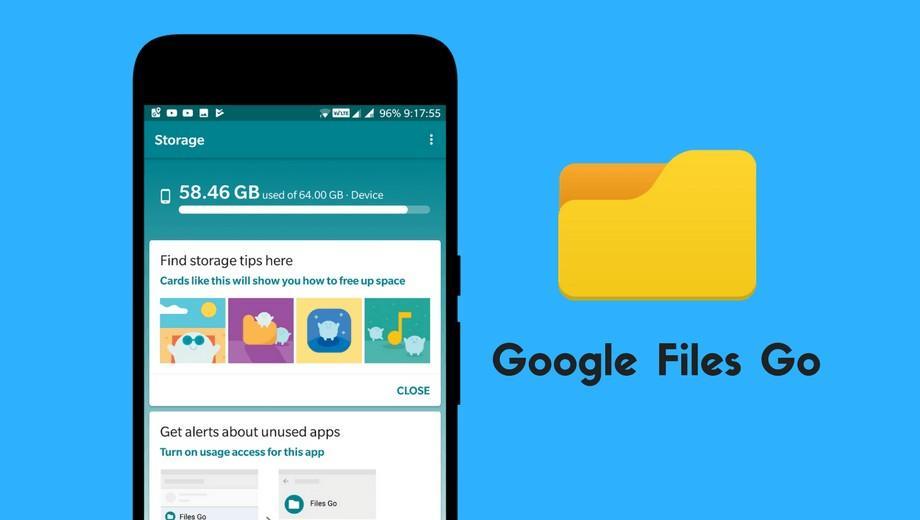
Files by Google started life in 2017 as “Files Go,” a stripped-down storage cleaner for budget phones. In 2026 it’s something else entirely: a full file manager, a junk cleaner that actually works, an offline sharing tool, and a hidden vault: preinstalled on most Android phones and free on the rest. Most people only ever tap the cleaning suggestions. Here’s everything else it can do, and how to use each piece properly.
The quick answer: Files by Google is Google’s free file manager, and it’s organized around three jobs. The Clean tab finds junk files, duplicates, downloaded memes, oversized videos, and apps you haven’t opened in months, then lets you clear them in a couple of taps: nothing is deleted without your confirmation. The Browse tab sorts everything on your phone into categories (Downloads, Images, Videos, Audio, Documents, Apps) so you’re not digging through raw folders. On top of that you get offline file sharing through Quick Share, a PIN-protected Safe Folder for private files, favorites for quick access, and a trash bin that holds deleted files for 30 days before they’re gone for good. If your storage is full, this app plus ten minutes is usually all it takes. It comes preinstalled on Pixels and most other Android phones; if not, it’s a small free download from the Play Store.
The Clean tab: where the storage comes back
Open the app and the Clean tab greets you with a storage meter and a stack of suggestion cards. Each card targets a different kind of clutter:
- Junk files: temporary files and app cache that apps leave behind. Safe to clear, and often worth a gigabyte or more on its own.
- Duplicate files. The same photo or PDF saved twice (or five times). The app keeps one copy and offers to delete the rest.
- Old memes and forwarded media: Files by Google recognizes images that arrived through messaging apps like WhatsApp and flags the low-value ones. This card alone explains where half your storage went.
- Large files: everything on your phone sorted by size, so the 2GB screen recording from last year has nowhere to hide.
- Unused apps: apps you haven’t opened in a while, with their sizes, ready to uninstall in bulk.
- Blurry photos and screenshots: on many phones the app also suggests blurred shots and old screenshots for review.
The important detail: every card shows you exactly what it wants to delete, and you select or deselect items before confirming. It never silently removes anything. Review the duplicates card especially: “duplicate” means identical files, but you should still glance before you sweep.
Deleting files here is only one way to reclaim space. If you’d rather keep everything, there are tricks for that too: see our guide on how to free up storage on Android without deleting anything.
The Browse tab: an actual file manager
The Browse tab is the part people forget exists. Instead of dumping you into a folder tree, it groups your files into categories: Downloads, Images, Videos, Audio, Documents & other, and Apps. Tap into any category and you can sort by name, date, or size, switch between list and grid views, and select multiple files for batch operations: move, copy, rename, share, or delete.
Scroll down and you’ll find storage sources: internal storage for the traditional folder view, plus your SD card and connected USB drives when present. So when you do need to dig into a specific folder path, that’s still here. The Apps section also lists APK files sitting in your downloads, which is handy for clearing out installers you no longer need.
Two small features worth adopting:
- Favorites: long-press any file and mark it as a favorite. It shows up in a dedicated Favorites collection, which beats re-searching for the same boarding pass or PDF five times.
- Search. The magnifying glass searches across everything on the device, and recent versions understand descriptive queries, not just exact filenames.
Offline file sharing and Quick Share
Files by Google was doing offline phone-to-phone transfers years before it was cool. Today the Share feature hands off to Quick Share, the system-wide sharing tool built into Android. Both phones need to be nearby with Bluetooth and location on; the transfer itself runs over a direct Wi-Fi connection between the devices, so it uses zero mobile data and moves large files far faster than Bluetooth ever could: full-length videos in a minute or two rather than an hour.
To use it, open the Share area in Files by Google (or just select files anywhere and hit share, then pick Quick Share), choose the receiving device, and accept on the other end. It’s encrypted in transit and works with no internet connection at all, which makes it the right tool for sharing videos in places with bad signal or expensive data.
Safe Folder: a PIN-locked vault
Safe Folder is a hidden, encrypted space inside the app guarded by a 4-digit PIN or a pattern. Move a file into it and that file disappears from the rest of the phone. It won’t show in your gallery, other file managers, or search results, and it’s not synced or backed up anywhere. Opening the folder requires the PIN every time, even mid-session if you switch apps.
Setting it up takes seconds: scroll to Safe Folder in the app, set your PIN or pattern, and start moving files in via the long-press menu. Use it for documents like ID scans, financial paperwork, or anything you’d rather not have visible when you hand someone your phone to show a photo.
One serious warning: there is no PIN recovery. Because the folder is locked on-device and Google can’t peek inside, a forgotten PIN means the contents are unrecoverable. Pick a PIN you won’t lose, and keep independent copies of anything truly irreplaceable.
Trash: your 30-day safety net
Files deleted through Files by Google go to the app’s Trash rather than vanishing instantly. They sit there for 30 days, during which you can open the Trash from the menu and restore anything you deleted by mistake. After 30 days they’re removed automatically and permanently. You can also empty the trash manually if you need the space right now: just know that’s the point of no return.
Note that trashed files still occupy storage until they’re purged, so if you cleaned up to make room for something big and the meter didn’t move much, empty the trash.
Tied into Android’s storage management
On Pixels and many other phones, Files by Google is wired into the system itself. The “Free up space” option inside Android’s Settings > Storage screen launches straight into the app’s Clean tab, and low-storage notifications route you there too. If you use Google Photos with backup enabled, you’ll also see a card offering to delete local copies of photos and videos that are already safely backed up: frequently the single biggest space win on any phone.
FAQ
Is Files by Google preinstalled on my phone?
On Pixels and a large share of other Android phones, yes: look for an app called “Files” with the multicolor triangle-circle-square icon. If your phone ships with the manufacturer’s own file manager instead (Samsung’s My Files, for example), Files by Google is a free, lightweight install from the Play Store and the two coexist fine.
I forgot my Safe Folder PIN. Can I recover the files?
No. There’s no recovery path by design: Google can’t unlock it for you, and support can’t either. The only reset options wipe the folder’s contents. This is why you should treat Safe Folder as private storage, not as the only copy of important files.
Will the cleaning suggestions delete my photos?
Not without your explicit confirmation. Every cleaning card shows the exact files first, and you tick what to remove. The only card touching your photo library is the “back up and delete” suggestion, which removes local copies of items already backed up to Google Photos. The cloud copies stay. Still, review before you confirm; and remember mistakes can be pulled back from Trash within 30 days.
How fast is offline sharing?
Fast. Quick Share transfers run over a direct Wi-Fi link between the two devices, not Bluetooth, so real-world speeds typically land in the tens of megabytes per second. A 1GB video usually takes a minute or two depending on the phones involved. No internet or mobile data is used at any point.

Shivam has been working as a Tech journalist since 2014. He has worked at many Tech news blogs and Amazon India after that he joined TheLeaker in 2017 as a staff writer and now he’s an editor on the portal. When he is not working, you can find him playing games and listening to pop music. You can find him on Facebook and Twitter and can also contact him via email at [email protected]