
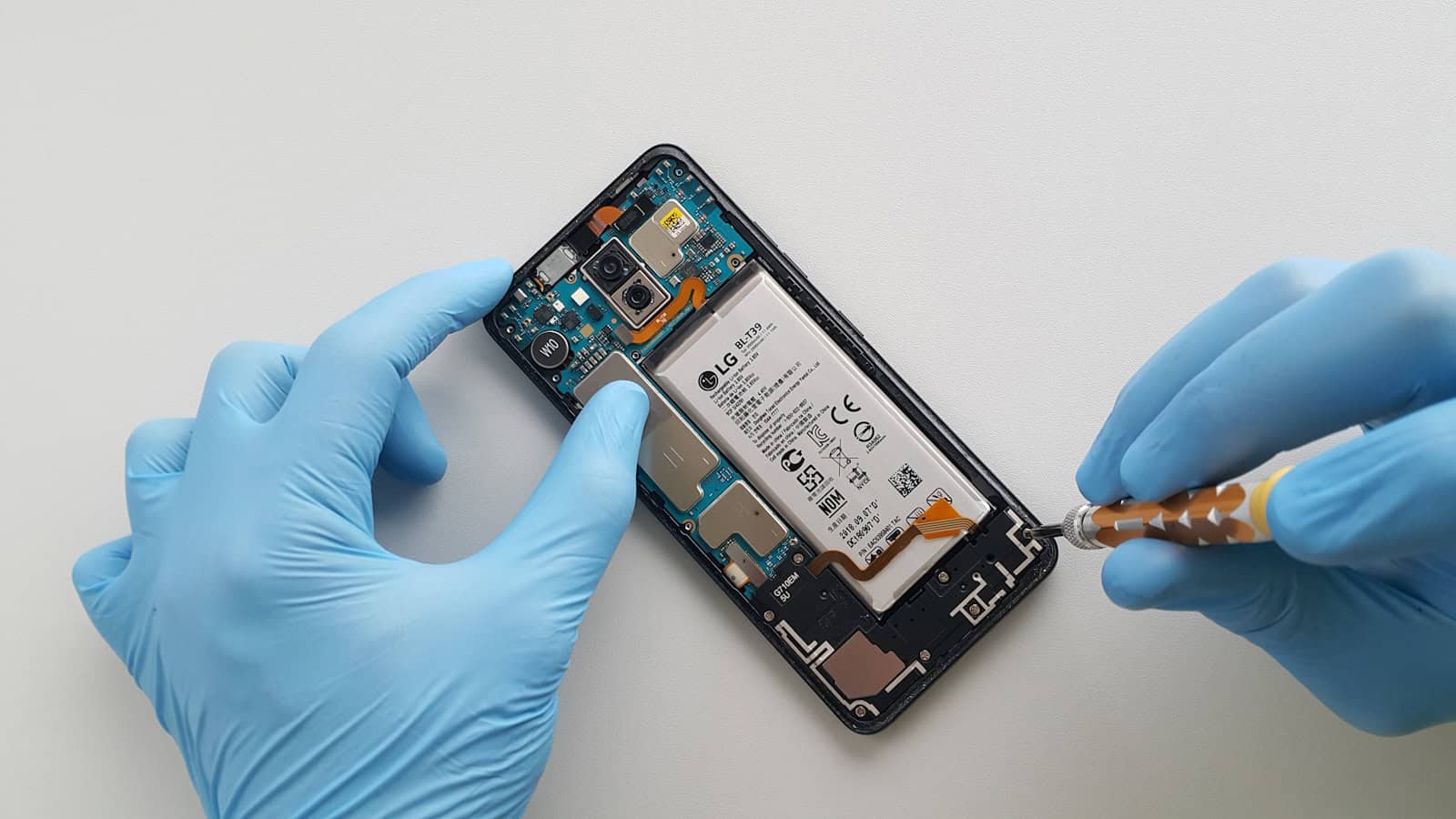
Every phone you have ever owned was designed to be replaced. Fairphone right to repair is the whole pitch: it is the one company that builds its phones to be fixed, not junked, and for the first time it has European law standing behind it. So the obvious question is whether a phone can genuinely stay useful for ten years, or whether that is a nice story told over a Snapdragon 7s Gen 3.
The quick answer: Fairphone’s current model, the Fairphone (Gen. 6), is the most repairable mainstream phone you can buy. It earned a perfect 10 out of 10 from iFixit, ships with a five-year warranty, and Fairphone commits to software updates until 2033 with at least seven Android upgrades. Twelve parts unscrew in minutes, and Fairphone sells the battery for €39.95 and the display for €89.95. Meanwhile the EU’s ecodesign rules, applying since 20 June 2025, force every phone sold in Europe to carry a repairability grade and guarantee spare parts for seven years after a model stops selling. The catch is real, though: mid-range silicon at a flagship-adjacent price, a €549 to €599 sticker in Europe, and in the US a $899 route through Murena that only works properly on T-Mobile. A decade is plausible. It is not free.
What Fairphone actually sells right now
The company’s current phone is branded simply “the Fairphone (Gen. 6),” announced in June 2025. Per Fairphone’s own product page, it runs a Snapdragon 7s Gen 3, has a 6.31-inch 120Hz LTPO OLED panel behind Gorilla Glass 7i, 8GB of RAM, 256GB of storage with microSD expansion up to 2TB, and a user-replaceable 4,415mAh battery that Fairphone says reaches 50% in 25 minutes.
None of that is remarkable in 2026. That is rather the point. Fairphone’s pitch is not the spec sheet, it’s what happens in year four.
The company lists twelve modules you can swap yourself with a screwdriver, and it publishes the prices: €39.95 for a battery, €89.95 for a display, €19.95 for the USB-C port. Those three components are what kill most phones. When a display costs less than a nice dinner out and takes minutes to fit, the maths of “repair or replace” flips completely.
On support, Android Headlines reported at launch that the phone ships with a five-year warranty and eight years of updates. Fairphone’s own page puts a date on it: software support until 2033, with at least seven Android version upgrades, monthly security patches for roughly three years and then bi-monthly through to June 2033. That is a longer commitment than Google or Samsung currently offer, and it is written down rather than implied.
The independent verdict: a perfect score, and what it means
iFixit tore the phone down and gave it 10 out of 10. In its teardown writeup, the repair site framed the device as proof that phones don’t have to be disposable. Engadget covered the same result, noting the design leans on screws and connectors rather than adhesive.
That distinction matters more than the number. Glue is what makes a modern phone repair a heat-gun-and-prayer job. Screws are what make it a Tuesday evening. Fairphone has effectively removed the step where a repair can go catastrophically wrong for a non-expert.
It’s worth being clear about what a 10/10 does not mean. It does not mean the phone is fast, or that the cameras compete with a Pixel, or that the resale value will be strong. It means that when something breaks, you have a realistic path to fixing it without a specialist. Those are different virtues, and buyers conflate them constantly.
The EU rules that changed the ground under everyone else
Fairphone spent a decade as a curiosity. Then Brussels wrote its worldview into law.
According to the European Commission’s announcement, ecodesign and energy-labelling requirements for smartphones and tablets began applying on 20 June 2025. The headline obligations:
- Batteries must survive at least 800 charge cycles while keeping at least 80% of original capacity.
- Manufacturers must supply key spare parts within 5 to 10 working days, and keep doing so for at least seven years after a model stops being sold in the EU.
- Operating system updates must be provided for at least five years from the date the last unit of a model is sold.
- Devices must show greater resistance to drops, scratches, dust and water.
- Every phone carries an energy label showing efficiency, battery longevity, and ingress protection, plus a repairability grade from A down to E.
That last item is the quiet revolution. A letter grade on the box, visible at the point of sale, changes buying behaviour in a way that a blog post about adhesive never will. Fairphone, predictably, secured an A. The company confirms the EU Energy Label A rating in its 2025 impact report.
There is a second law arriving behind it. The EU Batteries Regulation’s removability and replaceability article kicks in from February 2027. Right to Repair Europe’s analysis of the guidelines is worth reading precisely because it is not celebratory. The campaign group points out that a battery counts as removable if commercially available tools will do the job, rather than basic household tools, and, more importantly, that the smartphone ecodesign rules are set to prevail over the batteries rules. In practice, a manufacturer whose phone clears the longevity and waterproofing bar can keep the battery sealed and restrict replacements to professional repairers. Right to Repair Europe calls that a missed opportunity and warns it sets a precedent.
So no, February 2027 does not mean every phone in Europe suddenly pops open like a 2009 Nokia. It means the default shifts, with a well-lobbied escape hatch attached.
Does the ten-year claim survive contact with reality?
Fairphone has actual field data now, which is more than most sustainability marketing can say. Its 2025 impact report states that around 40% of Fairphone 3 units were still active seven years after launch, and that its devices last close to twice the industry average. The company reported nearly 150,000 devices sold in 2025, up 41% year on year, with over 70% of Gen. 6 buyers being new to the brand.
Read that carefully. 150,000 units is a rounding error next to Samsung. But 40% still running after seven years is a strong longevity number, and it is the only figure in this whole debate backed by a real installed base rather than a promise.
Where the ten-year claim gets shakier is software. Hardware support until 2033 is contractual. Whether the seventh Android upgrade on a Snapdragon 7s Gen 3 feels good in 2032 is a different question, and history is not encouraging. A chip that is mid-range today will be running an operating system designed for silicon that doesn’t exist yet. Fairphone can ship the update. It cannot make the phone feel new.
The honest framing is this: a Fairphone can plausibly stay functional and secure for a decade. Expecting it to stay pleasant for a decade is optimistic. If your phone is already struggling, our guide to why phones overheat and how to cool them down covers the thermal side of ageing hardware, which tends to bite before the software does.
The trade-offs nobody should skip
Price versus performance. Fairphone’s store lists €549 for the Android version and €599 for the /e/OS build. UK listings sit in the high £400s according to comparison sites like idealo. At that money you can buy a phone with markedly better cameras and a faster chip. You are paying a premium for repairability and ethics, not for silicon.
The US situation is awkward. Fairphone does not sell directly in America. The route in is Murena, the company behind the de-Googled /e/OS. Murena announced US availability of the Murena Fairphone (Gen. 6) at $899. A substantial jump over the European price. Worse, it is effectively a T-Mobile phone. Fairphone’s own US support page and Murena both steer buyers to T-Mobile or its MVNOs, and Verizon is not supported. If you are on Verizon, this phone is not an option, full stop.
Cameras and specs are mid-tier. The Gen. 6 dropped to a dual rear camera setup, down from the triple 50MP arrangement on the Fairphone 5. If photography is your priority, look elsewhere and accept the compromise consciously.
Ecosystem friction. Buying the /e/OS variant means giving up Google services by design. That is the point for some buyers and a dealbreaker for others. Know which you are before you order.
What we still don’t know
Fairphone has not announced a Gen. 7. Its CEO told TechRadar that two new products are coming in 2026 and that they will push the envelope on modular and sustainable tech: without confirming that either is a phone. Given Fairphone’s roughly two-year cadence, a tablet or an audio product in 2026 looks at least as likely as a new handset.
We also don’t know how aggressively the EU will police the repairability grade, or how many manufacturers will simply take the ecodesign exemption route on sealed batteries once February 2027 arrives. And we don’t know whether Fairphone’s US position improves; right now it depends entirely on a partner and one carrier.
Finally, the ten-year test is untested at the top end. The oldest data point Fairphone has is the Fairphone 3 at seven years. Nobody, Fairphone included, has yet run a modern smartphone to a decade with a straight face.
Is the Fairphone (Gen. 6) worth the price if I don’t care about ethics?
Probably not on spec alone. You can get more processor and better cameras for less. It becomes worth it if you plan to keep a phone five years or longer, because a €39.95 battery and a €89.95 screen you fit yourself change the total cost of ownership dramatically. Buy it for the long tail, not the launch-day experience.
Do the new EU rules mean my next phone will have a removable battery?
Not necessarily. The Batteries Regulation’s removability article applies from February 2027, but Right to Repair Europe notes that the smartphone ecodesign rules take precedence, letting phones that meet tougher longevity and water-resistance standards restrict battery replacement to professionals. Expect easier battery service across the board, not a universal return to pop-off backs.
Can I use a Fairphone in the United States?
Yes, via Murena, at $899, but with caveats. Murena and Fairphone both recommend T-Mobile or T-Mobile MVNOs such as Mint, Metro, Tello or US Mobile. Verizon is not supported. Treat it as a T-Mobile-network device and plan your service accordingly before you buy.
Does the perfect iFixit score mean anything for everyday owners?
It means repairs are within reach of an ordinary person with a screwdriver, because the phone is held together by screws and connectors rather than adhesive. It does not speak to performance, camera quality, or resale value. A 10/10 is a statement about the fifth year of ownership, not the first week.
Related: Asus Just Stopped Making Phones: What That Means for ROG and Zenfone Owners

Akshay Mhatre is a Tech Journalist who likes to keep up with the latest from the tech world. He has worked at many popular news portals like BGR and TechRadar before joining TheLeaker as a News writer and journalist. A writer by day and a VFX artist by night. In his free time, he also likes to make motion graphics and concept art. You can find him on Instagram @akshayrazr_95 and contact him on akshaymhatre[@]theleaker.com.