
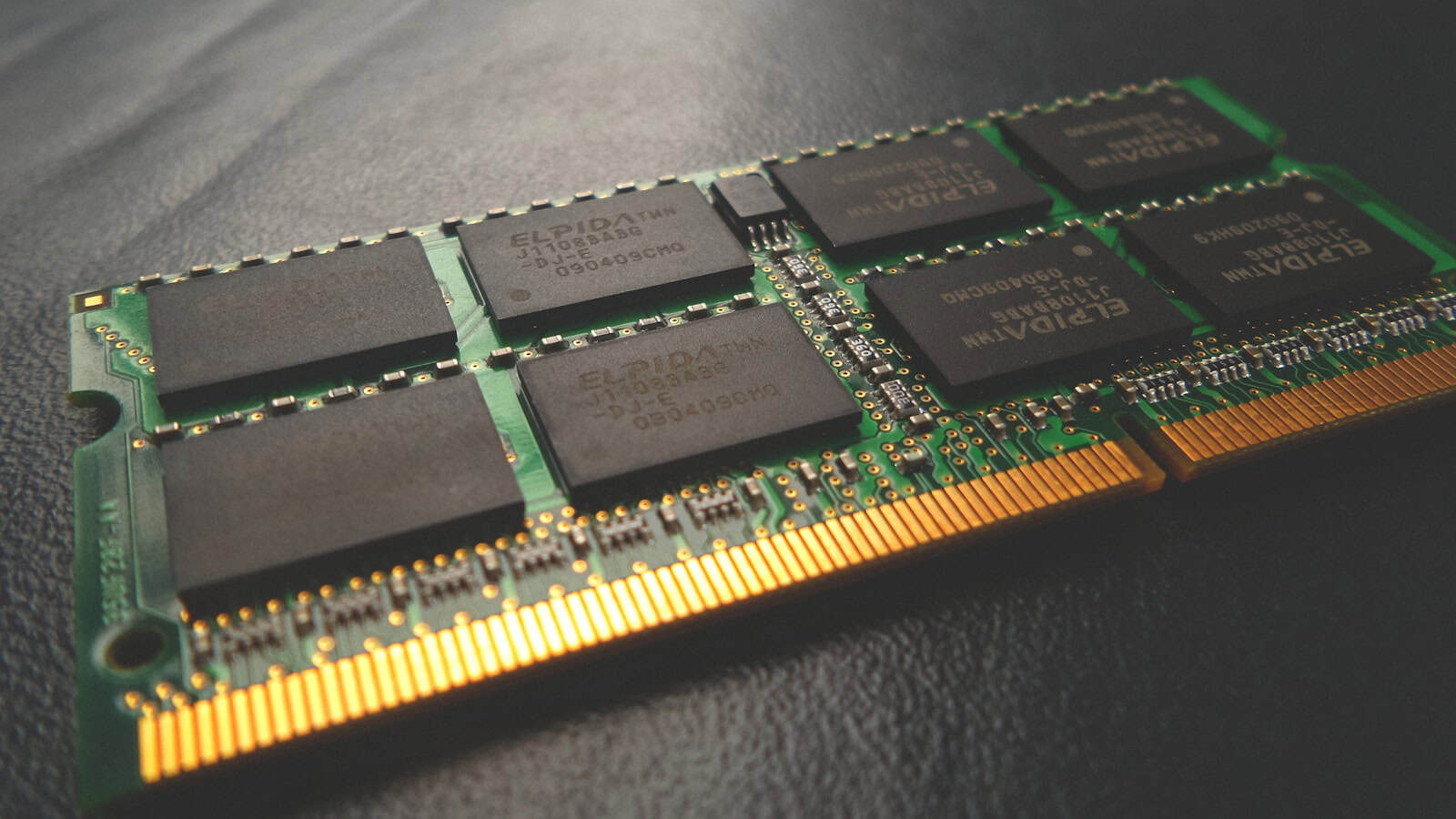
Something strange is happening at the bottom of the phone market: a memory price crisis is making budget phones more expensive and less impressive at the same time: less RAM, less storage, higher price tags, and in some cases no new model at all.
It isn’t greed, and it isn’t your imagination. It’s memory. The chips that hold your apps open and store your photos have become the single most expensive thing inside a cheap phone, and the reason has almost nothing to do with phones.
The quick answer: AI data centres are consuming an enormous share of the world’s memory manufacturing capacity, which has pushed DRAM and NAND prices to levels the consumer electronics industry hasn’t seen. Mobile DRAM contract prices surged again in the second quarter of 2026, and analysts now put memory at more than half the total build cost of the cheapest phones. Budget phones get hit hardest because they have no margin to absorb it. The result: price rises on entry-level Galaxy and Redmi models, RAM downgrades across the board, and at least one brand, Nothing’s CMF, cancelling a phone outright. If you’re shopping under a modest budget, the smart moves right now are buying last year’s model, buying refurbished, or holding on to what you’ve got. Waiting for prices to fall is not a plan; nobody credible expects meaningful relief before 2027 at the earliest.
Why memory got so expensive
Start with the thing driving all of it: high-bandwidth memory, or HBM. It’s the specialised stacked memory that sits next to AI accelerators in data centres, and demand for it is effectively bottomless right now.
Here’s the problem. HBM is made in the same fabs, on the same wafers, as the ordinary DRAM in your phone, and it eats capacity. A Micron executive has said HBM consumes roughly three times the wafer capacity of standard DRAM per gigabyte, as Network World reported. Every wafer that goes to an AI customer is a wafer that doesn’t become phone memory. And because HBM sells at much higher margins, manufacturers have every incentive to keep pushing capacity that way.
Samsung has been open about the consequences. Its global marketing head told Bloomberg in January that shortages would affect pricing across the whole industry, in the same Network World report. That’s a memory maker warning its own customers that the bill is going up.
Then the numbers arrived. TrendForce estimated that mobile DRAM contract prices would rise again in the second quarter of 2026, with LPDDR4X average selling prices climbing roughly 70 to 75 percent quarter-on-quarter and LPDDR5X somewhere around 78 to 83 percent, in its May analysis. Quarter-on-quarter. Not year-on-year. That is a component cost roughly doubling in three months.
Why cheap phones get hurt worst
This is the bit that isn’t obvious, and it’s the whole story.
A flagship phone costs a lot to build, but memory is a modest slice of that. You’re also paying for a top-end processor, a multi-camera system, a premium display, a titanium or glass frame, and a large marketing budget. When memory doubles, the total build cost moves by a manageable amount, and the margin on a $1,200 phone is fat enough to swallow it.
A $120 phone has none of that cushion. Cheap chipset, basic screen, plastic body, one real camera. Strip all that out and memory is a huge proportion of what’s left. Counterpoint Research has found that in the very cheapest tier, memory has climbed to a majority share of the entire bill of materials, and that the DRAM surge has pushed low-end build costs up far more than high-end ones in percentage terms. Tom’s Hardware reported the headline figure: memory now accounts for up to 64 percent of the cost of lower-tier phones, with budget shipments forecast to fall around 22 percent.
Gartner put a number on the consumer side of that squeeze. In a February forecast, the firm estimated a 130 percent surge in combined DRAM and SSD prices by the end of 2026, translating to roughly 13 percent higher smartphone prices and 17 percent higher PC prices versus 2025, with worldwide smartphone shipments falling 8.4 percent, in its published analysis. Crucially, Gartner expected the pain to concentrate at the bottom: basic smartphone buyers leaving the market far faster than premium buyers, who have the margin headroom to be shielded.
In plain terms: the phone industry can protect the $1,000 phone. It cannot protect the $150 one.
The brands that have already blinked
You don’t have to take the analysts’ word for it. The behaviour is visible.
Nothing’s CMF cancelled a phone. This is the clearest single data point in the whole story. Co-founder Akis Evangelidis said in June that CMF would not launch a new phone in 2026, explaining that with memory prices where they were, the company couldn’t build something that felt like a real step forward at a price that made sense for the brand, as Engadget reported. GadgetMatch noted the successor isn’t dead: just pushed out, with CMF focusing on other product categories in the meantime. A budget brand that decided the maths didn’t work is about as blunt a signal as the market can send.
Samsung has raised entry-level prices repeatedly. In India, Samsung pushed prices up on a batch of budget models including the Galaxy A06 5G, A07, A17 5G, F07, F17 and M07, effective early July: around ₹1,000 across storage tiers, and reportedly the fifth such adjustment for these devices in recent months, per 9to5Google. That report notes the base Galaxy A06 5G, launched at ₹10,499, now sells for meaningfully more with the same 4GB and 64GB configuration.
Xiaomi raised Redmi prices in China. Xiaomi announced increases on the Redmi K90 Pro Max and adjusted promotional pricing on Turbo 5 models from April, explicitly citing surging memory chip costs, as reported by Nokiamob.
Nothing’s CEO told everyone this was coming. Back in January, Carl Pei published a note arguing that memory modules costing under $20 a year earlier could exceed $100 by the end of 2026 for top-tier phones, and that manufacturers would have to raise prices by 30 percent or more in some cases, or cut elsewhere. 9to5Google covered the post, in which Pei described the specs race as being over for now. Six months on, that reads less like a warning and more like a forecast that landed.
Even Asus’s decision to stop launching phones in 2026 sits in this context. It named competitive pressure and an AI pivot as the reasons, but a small-volume phone business with thin margins is exactly the kind of operation a memory shock kills.
What this actually means for the phone you buy
Three things are happening simultaneously, and only one of them is a price increase.
1. Prices go up. The obvious one. Gartner’s 13 percent smartphone estimate is an average. The effect at the bottom of the range is worse.
2. Specs go down. This is the sneakier one, because the price stays the same and you’re supposed to not notice. TrendForce’s analysis described high-end phones settling on 12GB as mainstream with 16GB adoption declining, mid-range reverting to 8GB, and entry-level mostly landing around 4GB. If you were expecting your next $250 phone to have more RAM than your last one, adjust that expectation.
3. Models disappear. The cheapest configurations get quietly dropped. If a 128GB variant costs almost as much to build as a 256GB one used to, brands stop offering the small one, or stop offering the phone.
The practical consequence of point two is that phones in the budget and mid tiers will feel slower over time than their predecessors did, because less RAM means fewer apps stay resident in memory and more reloading. That’s a real, noticeable difference in daily use, not a spec-sheet abstraction. If you’re stuck on a phone with modest RAM, a few of the settings tweaks that genuinely speed up an Android phone will buy you more than you’d expect.
So what should you actually do?
Here’s the honest advice, in order of how well it works.
Buy last generation, not this generation. This is the single best move right now. Phones designed and priced before the worst of the memory surge often carry more RAM and storage for the money than their 2026 replacements. A one-year-old mid-ranger with 8GB and 256GB may well beat a brand-new one with 8GB and 128GB at the same price. Check the software support window before you buy, that’s the trade-off, but on raw value it’s rarely close.
Consider refurbished or certified pre-owned. Gartner’s forecast explicitly anticipated buyers shifting toward refurbished and second-hand devices as new prices climb. Buy from a seller offering a warranty and a battery-health guarantee, not a random marketplace listing.
Keep your current phone longer. Unglamorous, and the correct answer for a lot of people. If your phone still gets security patches and the battery holds a day, a battery replacement costs a fraction of a new handset and buys you a year or two of waiting out the crisis.
If you must buy new, prioritise RAM over almost everything else. Camera megapixels and screen refresh rates matter less to how a cheap phone feels in year three than whether it has enough memory to keep your apps loaded. Given the direction of travel, that’s the spec that will age worst.
Don’t wait for prices to drop. This is important. Waiting is a strategy when a shortage is temporary. Nobody serious is describing this one that way: Samsung’s own memory leadership has warned of significant shortages continuing into 2027, and new fab capacity coming online is largely earmarked for AI customers rather than consumer devices. If you need a phone, buy the best value available now rather than holding out for a correction that may not come.
What we still don’t know
How long this lasts. Forecasts range from relief in 2027 to nothing meaningful before 2028. They all depend on assumptions about AI infrastructure spending that could change quickly in either direction. Anyone giving you a confident date is guessing.
Whether prices come back down at all. Component prices are sticky. Even when supply normalises, brands that discovered buyers will pay more may not rush to reverse. The 2026 price level could simply become the new baseline.
What happens to the sub-$150 tier. Counterpoint’s forecast of a sharp budget-segment contraction implies a lot of people either buying second-hand or dropping out of the new-phone market entirely. Whether that segment recovers, shrinks permanently, or gets replaced by refurbished supply is open.
Whether more brands pull out. CMF skipped a year. Asus stopped launching phones. Whether that’s the extent of it or the start of a pattern is the thing to watch over the next few quarters.
Why does AI make my phone more expensive?
AI servers need enormous amounts of specialised high-bandwidth memory, which is made on the same manufacturing capacity as the ordinary memory in phones, and consumes more of it per gigabyte. Chipmakers have shifted capacity toward the higher-margin AI product, leaving less supply for consumer memory and pushing prices up sharply.
Should I buy a phone now or wait for prices to fall?
Buy now if you need one. The supply pressure is structural rather than a short blip, and multiple analyst forecasts point to elevated pricing continuing into 2027 or beyond. Waiting mostly risks paying similar money for a phone with a shorter remaining support life.
Is 8GB of RAM still enough in 2026?
For most people, yes: 8GB handles messaging, browsing, video and normal app switching fine. TrendForce’s analysis indicates 8GB is settling in as the mid-range standard again. Below that, at 4GB, expect visible app reloading and a phone that ages badly. If you’re choosing between 4GB and 8GB at a small price difference, take the 8GB every time.
Are used phones actually a good idea right now?
They’re a better idea than usual. New budget phones are worse value than they were a year ago, which makes a well-kept two-year-old mid-ranger comparatively strong. The two things to check: how much manufacturer software support is left, and the battery’s health. Buy from a seller who warranties both.
Related: Buying a Refurbished Phone: How to Not Get Burned

Yash Jain writes about Android and Apple for The Leaker, focusing on how to guides, download resources, and top and best roundups. His articles walk readers through setup steps and app choices, compare options across categories, and follow news updates across both mobile platforms as they develop.