
Your phone was fine last month. Now it’s begging for a charger by lunchtime, and you haven’t changed a thing about how you use it. Sound familiar? Battery drain is still one of the most common Android complaints in 2026, and most of it comes down to a handful of fixable causes: one misbehaving app, a screen setting you never touched, or a battery that’s simply worn out after a few hundred charge cycles.
The quick answer: Open Settings, then Battery, then Battery usage, and find out which app is eating the most power since the last full charge. If one app is way ahead of everything else, restrict its background activity or uninstall it. Next, lower your screen brightness or switch to dark mode, cut your screen timeout to 30 seconds, and turn off the always-on display. Check for a system update, since battery bugs often ship out with patches. Turn on Adaptive Battery and put rarely used apps to sleep. If drain continues, check battery health in Settings; on Android 16 and 17, many phones show a battery health percentage, and anything below roughly 80 percent means the battery itself is worn and a replacement will help more than any setting.
First, find out what’s actually draining the battery
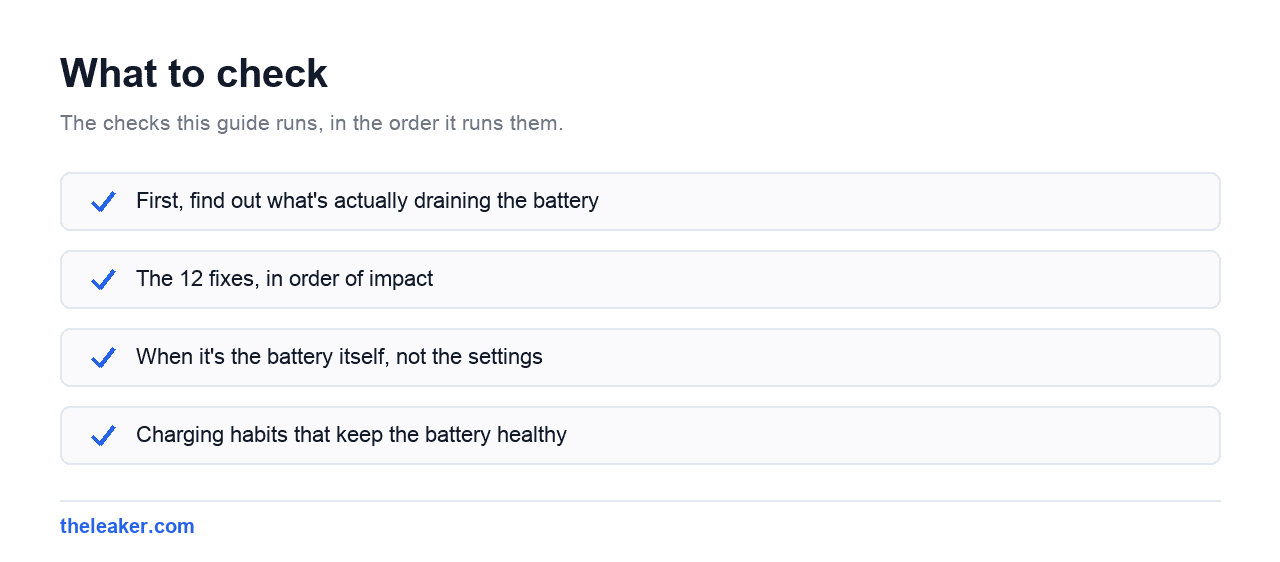
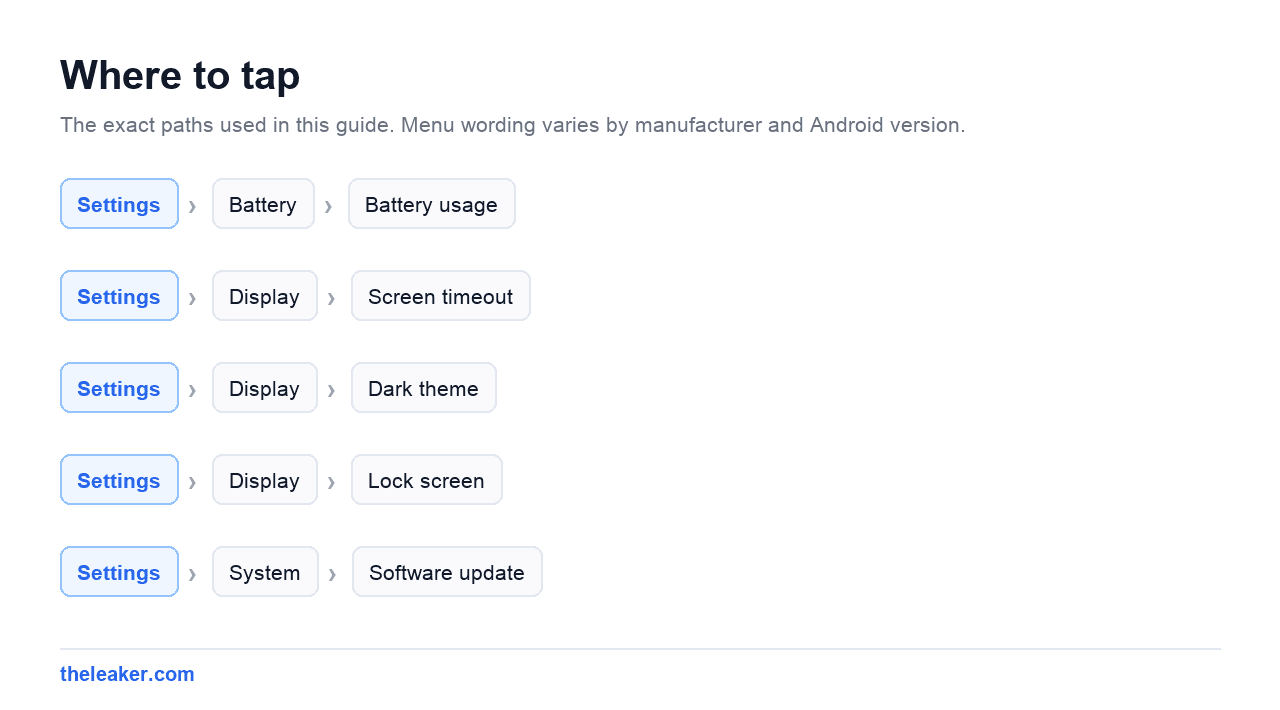
Before you change ten settings at random, spend two minutes on a diagnosis. Go to Settings > Battery > Battery usage (on Samsung phones it’s under Battery and device care). You’ll see a graph of drain since the last full charge and a ranked list of apps. Here’s how to read it:
- Screen at the top? That’s normal. Your display is almost always the biggest consumer. The fixes below in the screen section will help.
- One app you barely use near the top? That’s your culprit. A social media, shopping, or free VPN app burning 15 to 20 percent in the background is a classic sign of a misbehaving app.
- “Mobile network” or “Phone idle” unusually high? You’re probably in a weak signal area, and the radio is working overtime.
Now work through the fixes that match what you found.
The 12 fixes, in order of impact
1. Restrict or uninstall the worst offender
If one app stood out in battery usage, tap it and choose Restricted (or “Put app to sleep” on Samsung). This stops it running in the background while still letting you open it normally. If you can live without it, uninstall it. This single step fixes a huge share of sudden-drain cases.
2. Lower brightness and shorten screen timeout
The screen is the hungriest part of your phone. Turn on adaptive brightness so the phone dims itself indoors, and set Settings > Display > Screen timeout to 30 seconds. Every minute your screen stays on after you’ve put the phone down is pure waste.
3. Use dark mode on an OLED screen
Almost every phone sold in the last few years has an OLED panel, and OLED pixels use no power when showing black. Dark mode genuinely saves battery on these screens, especially at high brightness. Turn it on under Settings > Display > Dark theme.
4. Turn off the always-on display
The always-on display is convenient, but it keeps part of your screen lit around the clock and can cost a noticeable chunk of battery over a full day. Find it under Settings > Display > Lock screen and switch it to tap-to-show instead.
5. Install system and app updates
Battery drain bugs are common right after a major Android update, and they usually get patched within a few weeks. Check Settings > System > Software update, and update your apps in the Play Store. Give the phone a day or two after updating, since the system reindexes and reoptimizes in the background at first.
6. Turn on Adaptive Battery and battery saver
Adaptive Battery learns which apps you actually use and limits power for the rest. Confirm it’s on under Settings > Battery > Adaptive preferences. Schedule battery saver too: set it to kick in at 20 percent so it dims the screen and pauses background work when you need every minute.
7. Rein in location access
GPS is a heavy user of power, and plenty of apps ask for location they don’t need. Go to Settings > Location > App location permissions and switch anything non-essential to “Allow only while using the app” or “Ask every time.” A food delivery app has no business tracking you all day. While you’re there, check Location services > Wi-Fi and Bluetooth scanning; these let the phone scan for networks even when Wi-Fi is off, and you can safely turn them off.
8. Tame notifications and background sync
Every notification wakes the processor and can light up the screen. Long-press any notification you don’t care about and turn that category off. Remove old email accounts that still sync every 15 minutes.
9. Use airplane mode or Wi-Fi calling in weak signal areas
When your phone can barely reach a tower, the modem boosts power hard to hold the connection, and battery drops fast even with the screen off. If you work somewhere with poor reception, turn on Wi-Fi calling in your SIM settings so calls route over Wi-Fi and the cellular radio can relax. In a true dead zone, airplane mode with Wi-Fi on is the honest fix.
10. Lower the refresh rate if you’re desperate
Many phones run their screens at 120Hz for smooth scrolling, which costs power. Adaptive mode handles this well by default, but if you’re squeezing out every hour, set Settings > Display > Smooth display to standard 60Hz.
11. Keep the phone cool
Heat both drains and permanently damages lithium batteries. Don’t leave your phone on a car dashboard, and take the case off during gaming or fast charging if it gets hot. A phone that runs warm while idle usually points back to a background app, so revisit fix number one.
12. Clear cache and free up storage
A phone that’s nearly full works harder at everything, which indirectly costs battery. If your storage is above 90 percent, clear app caches and offload what you don’t need. Our guide on how to free up storage on Android without deleting anything walks through this without losing your photos or files.
When it’s the battery itself, not the settings
Batteries are consumables. After roughly 500 to 800 full charge cycles, which is about two to three years of typical use, capacity drops noticeably, and no setting can bring it back.
On Android 14 and newer, check Settings > Battery > Battery information. Recent Pixels and many other phones on Android 16 and 17 show a battery health percentage and cycle count right in Settings. If health is below about 80 percent, or your phone shuts down at 20 percent, or the percentage jumps around wildly, the cell is worn out.
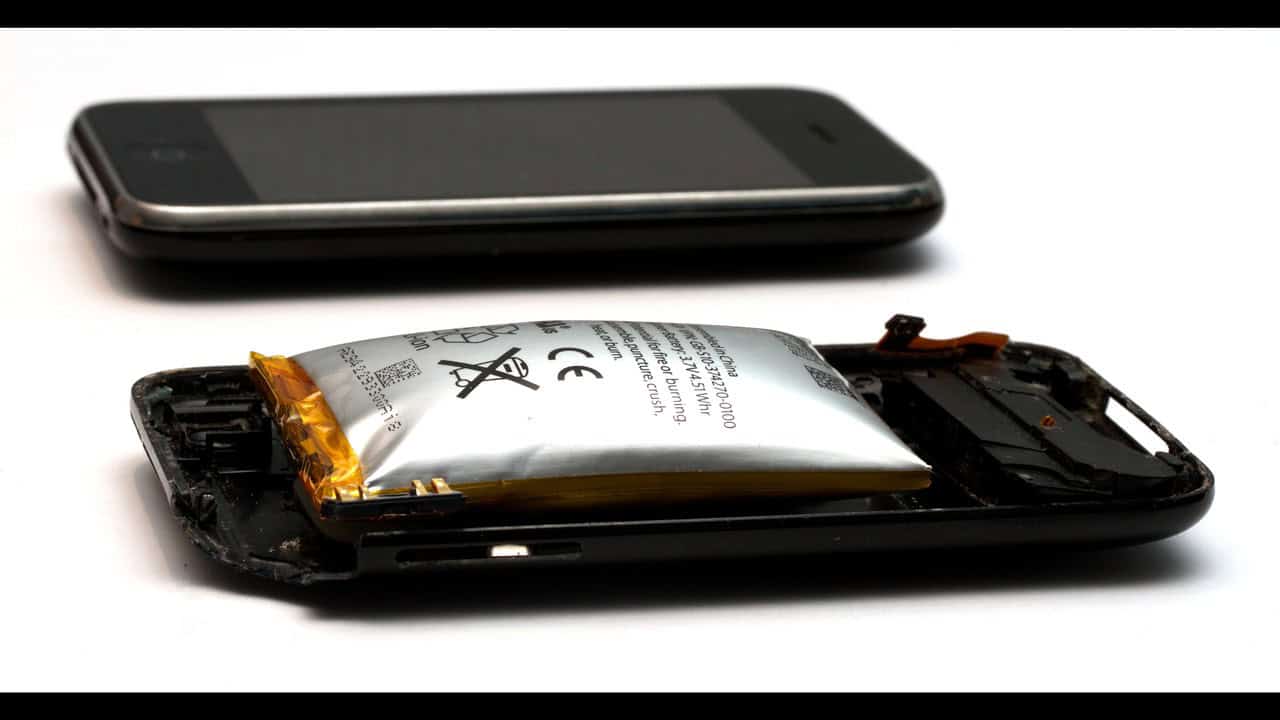
The fix is a battery replacement from the manufacturer or a reputable repair shop. It costs a fraction of a new phone and makes a two-year-old device feel new again. A swollen battery, where the back glass lifts or the phone bulges, means stop using the phone and get it serviced immediately.
Charging habits that keep the battery healthy
You can slow the wear-out process with a few easy habits:
- Turn on charging optimization. Nearly every 2026 phone has an 80 percent charge limit option or adaptive charging that finishes charging just before you wake up. Use it. Living between roughly 20 and 80 percent is much gentler on the cell than constant 0-to-100 cycles.
- Don’t obsess over overnight charging. Modern phones manage this fine, especially with adaptive charging on.
- Avoid heat while charging. Fast charging in a thick case in a hot room is the worst combination for long-term health.
One last note: skip the “battery saver” and “RAM booster” apps on the Play Store. Android manages memory well on its own, and these apps usually run constantly in the background, making drain worse while showing you ads. If you want more useful tweaks, check out these hidden Android settings that speed up your phone.
Frequently asked questions
Why is my battery suddenly draining after an update?
Two common reasons. First, the phone reindexes files and reoptimizes apps for a day or two after a major update, which is temporary. Second, the update may have shipped a genuine battery bug, in which case a follow-up patch usually lands within weeks. If drain persists past a few days, check battery usage for a specific app and restrict it.
Should I close all my apps to save battery?
No. Swiping away every app from the recents screen is a habit worth breaking. Android keeps recent apps frozen in memory using almost no power, and force-closing them means they must fully restart next time, which uses more battery, not less. Only force-stop an app if it’s specifically misbehaving in your battery usage stats.
Does 5G drain the battery faster than 4G?
It can, mainly in areas with weak or patchy 5G coverage where the phone keeps switching between networks. In strong coverage the difference is small on modern modems. In a fringe 5G area, setting your preferred network type to 4G/LTE in your SIM settings can noticeably extend battery life.
How do I know if I need a new battery instead of new settings?
Check the battery health readout under Settings > Battery on Android 14 or newer. Below about 80 percent capacity, replacement is the real fix. Other telltale signs: sudden shutdowns at 15 to 30 percent, the percentage dropping in big jumps, or a battery more than three years old. Any physical swelling means service the phone immediately.

Akshay Mhatre is a Tech Journalist who likes to keep up with the latest from the tech world. He has worked at many popular news portals like BGR and TechRadar before joining TheLeaker as a News writer and journalist. A writer by day and a VFX artist by night. In his free time, he also likes to make motion graphics and concept art. You can find him on Instagram @akshayrazr_95 and contact him on akshaymhatre[@]theleaker.com.