
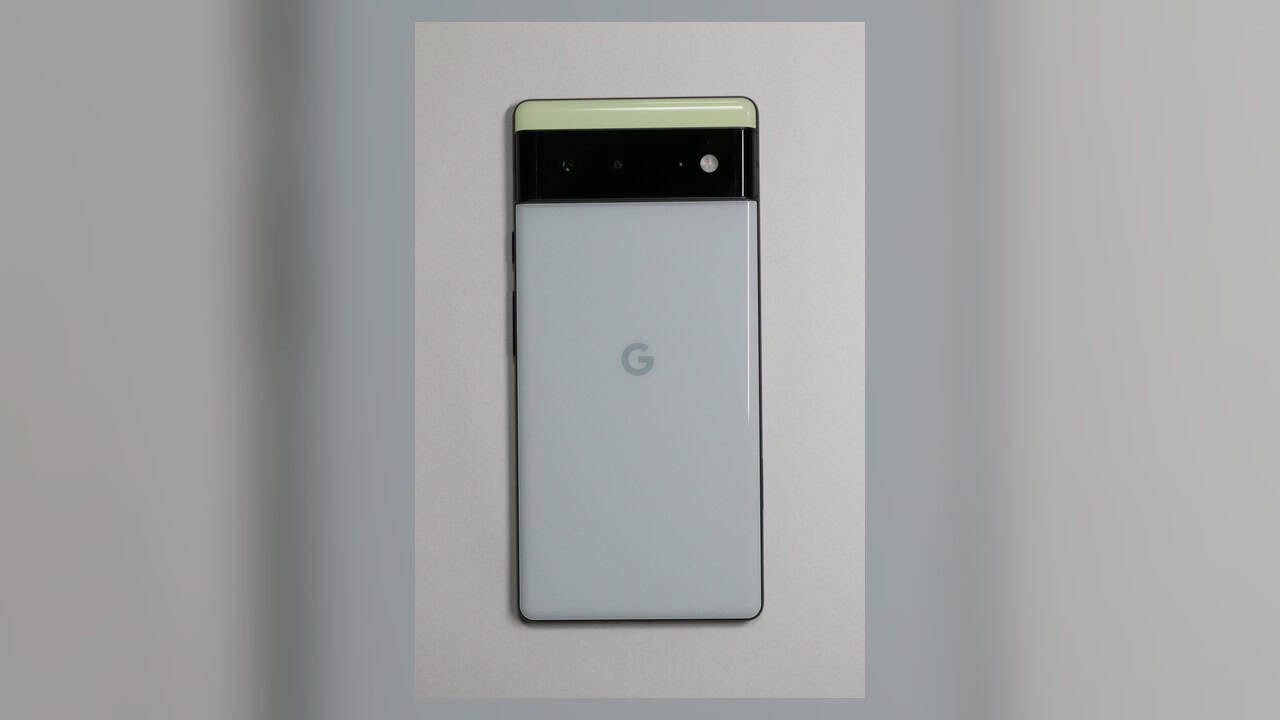
If you own a Pixel 6, the Pixel 6 Android 17 update is not just another release. It is the last one. Google told Pixel 6 and 6 Pro owners in its support forum that the devices will not receive the next quarterly release and reach end of life after this update, which makes this the most consequential update the phone will ever receive, and the one worth understanding properly before it lands.
The quick answer: Yes, the Pixel 6, Pixel 6 Pro and Pixel 6a are all getting Android 17, and it is rolling out now. It is also the final major Android version any of them will receive. Per Google’s official Pixel update support page, the Pixel 6 and 6 Pro reach end of support in October 2026, with the Pixel 6a running to July 2027. After those dates the phones keep working, but security patches and feature drops both stop on the same date rather than one ending before the other (more on why below). The Pixel 6 originally shipped with a promise of three Android upgrades, which would have ended at Android 15, and Google extended it to five years, so Android 17 is two full versions more than buyers were originally owed.
The dates that actually matter
| Device | Android 17 | End of support | What ends |
|---|---|---|---|
| Pixel 6 | Rolling out, final version | October 2026 | Security patches and feature drops |
| Pixel 6 Pro | Rolling out, final version | October 2026 | Security patches and feature drops |
| Pixel 6a | Rolling out, final version | July 2027 | Security patches and feature drops |
The Pixel 6a getting an extra nine months is not an error. It launched later than the 6 and 6 Pro, and Google’s support windows run from each device’s own release date rather than from the generation as a whole.
One point deserves precision here. On many older Android phones, the cutoff for new OS versions and the cutoff for security patches are two different dates, with security patches usually running longer. That is not the case for the Pixel 6 and 6 Pro. Google’s original promise was three years of OS upgrades and five years of security patches, two separate dates. When Google extended the OS-upgrade commitment to match the security window, it collapsed both into a single end date for this device. So for the Pixel 6 and 6 Pro specifically, “end of support” in October 2026 means both the last OS version and the last security patch land at the same time. OS support does not quietly end earlier while security patches keep going.
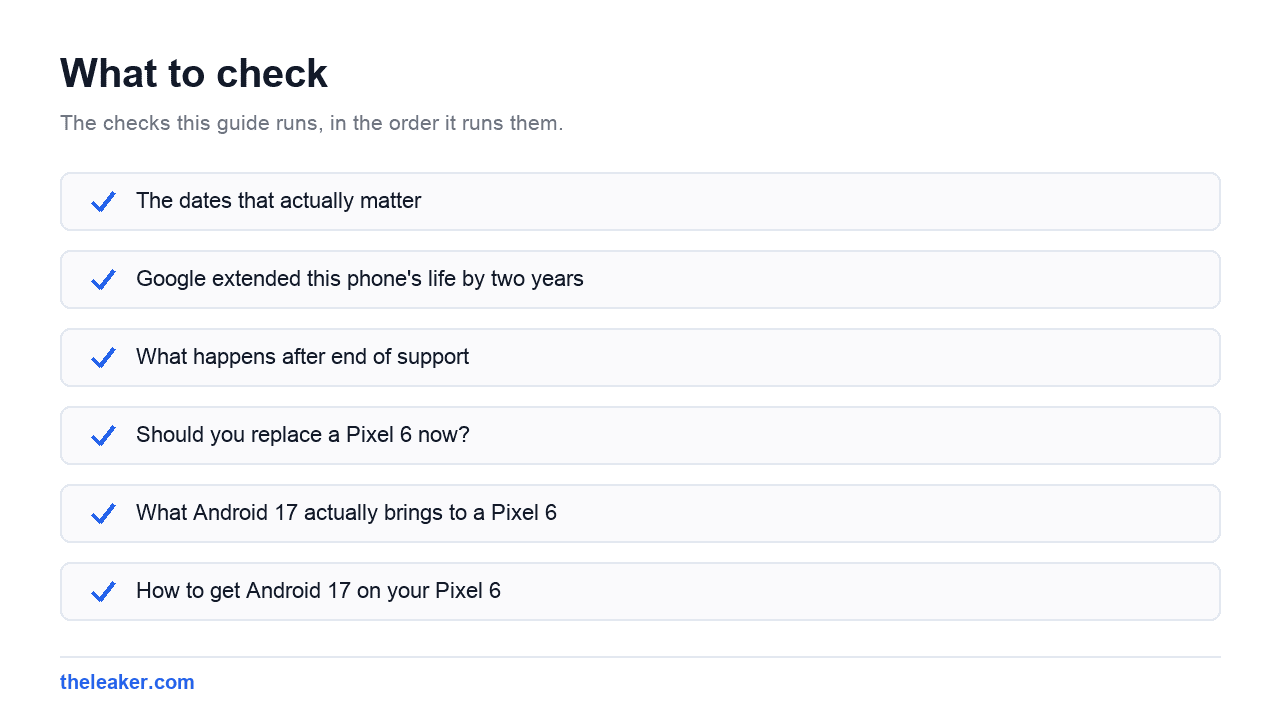
Google extended this phone’s life by two years
This is the part that deserves more credit than it gets, and it is genuinely unusual in the Android market.
When the Pixel 6 launched in October 2021, Google’s commitment was three years of Android version upgrades and five years of security patches. On that original promise, the Pixel 6 would have stopped at Android 15 and owners would have had no claim to anything further.
Google later extended the window to five years covering both operating system upgrades and security. That is why a phone released in 2021 is receiving Android 17 in 2026. Pixel 6 owners received two extra major Android versions beyond what they paid for, delivered retroactively to hardware already in people’s hands.
For context, most Android phones sold in 2021 at the Pixel 6’s price received two or three version updates in total. A five year runway on 2021 hardware is at the top of what the industry delivered that year, and it is the reason a Pixel 6 today still feels current rather than abandoned.
What happens after end of support
This is the practical question, and the honest answer is more reassuring than the phrase “end of life” suggests.
Your phone does not stop working. It does not lose apps, it does not lose calls, messaging or banking, and nothing is remotely disabled. What stops is the flow of new security patches from Google, along with new feature drops and the next Android version.
The risk is gradual rather than immediate. A phone that stops receiving patches does not become dangerous on the day support ends. It becomes progressively less protected as new vulnerabilities are discovered and left unfixed on that build. For most people that is a reason to plan a replacement over the following year, not to rush out the same week.
Two things help in the meantime. Most of the Android security surface that actually matters, including Google Play Services, the Play Store, Chrome and your individual apps, continues updating independently of the system version, because Google delivers those through Play rather than through system updates. And Google Play Protect keeps scanning regardless. The operating system underneath is what freezes.
Should you replace a Pixel 6 now?
Not immediately, and the timing depends on which model you have.
If you have a Pixel 6 or 6 Pro, support ends in October 2026, so you have a defined window and no urgency to act before it. The sensible plan is to take Android 17, use the phone through its remaining supported period, and start watching for a replacement around the point support lapses rather than before.
If you have a Pixel 6a, you have until July 2027, which is long enough that there is no decision to make right now.
When you do replace it, the calculation has changed considerably since 2021. Current Pixels from the Pixel 8 generation onward carry a seven year commitment for both versions and security, and Samsung matches that from the Galaxy S24. A phone bought today should reasonably be expected to last far longer in software terms than the Pixel 6 did, even with Google’s extension.
What Android 17 actually brings to a Pixel 6
A final update is often a thin one, and it is worth setting expectations honestly rather than promising a transformation.
The Pixel 6 runs the original Tensor chip, now five years old, and a growing share of what Google announces alongside a new Android version is gated to newer silicon. The on-device AI features that headline modern Pixel Drops generally require the neural hardware in Tensor G3 and later. A Pixel 6 receiving Android 17 gets the platform release, the security hardening and the interface changes, but not necessarily the feature list Google demonstrates on a Pixel 10.
That is not Google withholding things arbitrarily. Running current on-device models on first-generation Tensor is not viable, and a version of Android 17 that tried would run badly.
What you do get is worth having: the current platform security model, the updated permissions and privacy handling, and continued app compatibility as developers target the newer API level. For a phone at the end of its supported life, the security and compatibility side is the part that matters, and it is fully present.
One practical caution on older hardware. Major version updates on a five year old phone occasionally surface battery and storage issues that were already developing, because the update process is demanding and the first days afterward involve heavy background re-indexing. If your Pixel 6 battery is already weak, expect it to feel worse for roughly a week before settling.
How to get Android 17 on your Pixel 6
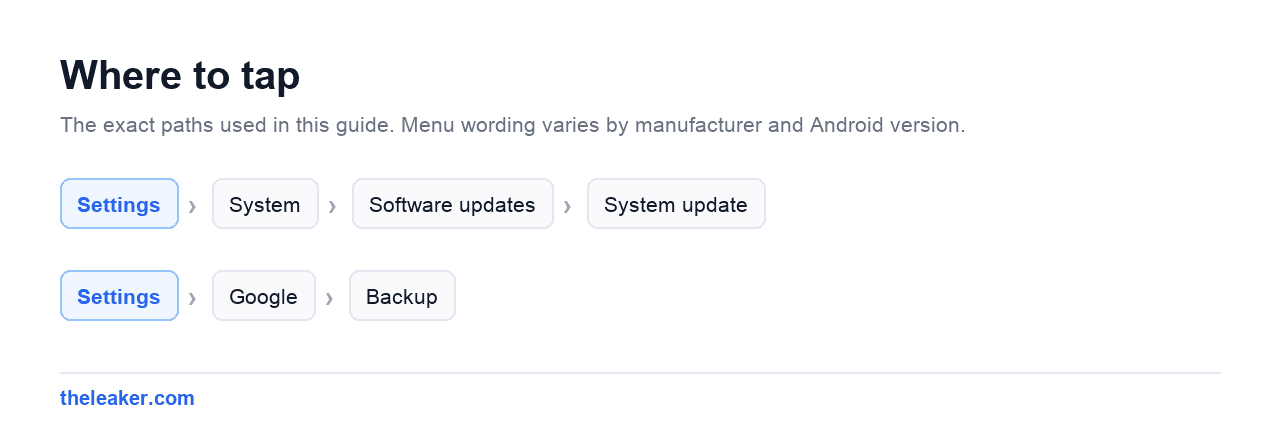
Open Settings, then System, then Software updates, then System update, and tap Check for update.
Google rolls out in waves rather than to everyone at once, so if nothing appears yet, that is normal. Two Pixel 6 handsets on the same carrier can be several days apart. Repeatedly checking does not move you up the queue.
Before installing a major version update on a phone this age, it is worth making sure your Google account backup is current, in Settings, then Google, then Backup. Major version updates on older hardware occasionally surface storage or battery problems that were already developing, and a current backup makes that a nuisance rather than a loss.
Frequently asked questions
Will the Pixel 6 get Android 18?
No. Google confirmed Android 17 is the final major version for the Pixel 6 and 6 Pro, and the same five year window applies to the 6a. There is no version after this one for these devices.
Is my Pixel 6 unsafe once support ends?
Not immediately. Play Services, Chrome and your apps keep updating through the Play Store independently of system updates, and Play Protect keeps scanning. What stops is system-level security patching, so the risk accumulates gradually. Treat it as a reason to plan a replacement within the following year.
Why does the Pixel 6a get support for longer than the Pixel 6?
Because Google measures the support window from each device’s own launch date, and the 6a launched later. It gets the same length of support, just starting and finishing later.
Can I install a custom ROM to keep getting updates?
You can, and the Pixel 6 is one of the better supported devices for it, but it is not a casual step. Unlocking the bootloader wipes the device and can break contactless payments and banking apps that check device integrity. It is a reasonable option for someone comfortable with the tradeoffs and a poor one for a primary phone.
Changelog
- 1 August 2026: Page created. Android 17 confirmed rolling out to Pixel 6, 6 Pro and 6a as their final major version. End of support confirmed as October 2026 for the 6 and 6 Pro, July 2027 for the 6a.
- 11 August 2026: Added direct sourcing for the end of support dates and the final-version claim, clarified that the OS-upgrade cutoff and security-patch cutoff fall on the same date for this device, and swapped the featured image for a real product photo.
Checking another device or brand? See our Android 17 update tracker for every manufacturer.
Related: Pixel Features Worth Switching For (And the Ones That Are Overhyped)

Hello, folks, my name is Akshay, and from the beginning, I like to play with the latest phones, gaming consoles, PCs, Laptops’s and whatnot. When I get spare time, I like to do Photography, and you will always find me playing with Photoshop, Lightroom, Premiere Pro, etc. In Love with Gadgets, my gear Motorola Moto G5 Plus. You can contact him on akshaydua[@]theleaker.com.