
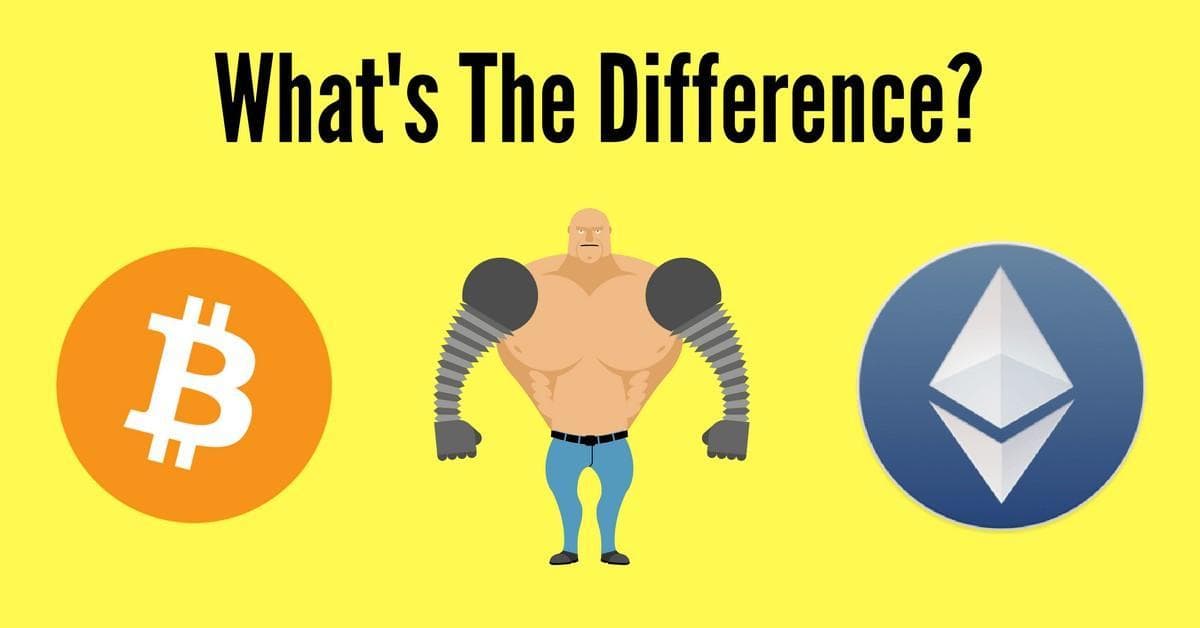
The quick answer: Bitcoin and Ethereum are the two largest cryptocurrencies, but they were built to do different jobs. Bitcoin was designed primarily as a digital store of value and a payment network, with a fixed maximum supply of 21 million coins. Ethereum was designed as a platform for running programs, called smart contracts, and its supply is not fixed the same way Bitcoin’s is. Bitcoin is generally viewed as the more conservative, established asset of the two, while Ethereum is viewed as the infrastructure layer for a much wider range of applications, from decentralised finance to NFTs.
What Bitcoin actually is
Bitcoin, launched in 2009, was the first cryptocurrency and remains the largest by market value. Its core purpose is narrow and deliberate: to be a decentralised digital currency that nobody can print more of at will. The total supply is capped at 21 million coins, a limit written into the protocol itself, which is central to the argument that Bitcoin functions as a form of digital gold, a scarce asset that cannot be inflated the way government-issued currency can be.
Bitcoin’s blockchain is intentionally simple. It is built to record and verify transactions securely, not to run complex applications on top of it. That simplicity is a design choice, not a limitation, and is part of why Bitcoin is generally viewed as the more stable and battle-tested of the two networks.

What Ethereum actually is
Ethereum, launched in 2015, was built to do more than move currency around. Its blockchain can execute smart contracts, self-executing code that runs exactly as programmed without needing a middleman. This is the foundation underneath decentralised finance platforms, NFT marketplaces, and thousands of other applications that developers have built on top of Ethereum’s network.
Ethereum’s own currency, ETH, is used to pay for the computing power needed to run these applications, a cost commonly called gas. Unlike Bitcoin, Ethereum does not have a fixed maximum supply, though its supply growth is now much slower than in its early years following changes to how new ETH is issued.
The technical differences that actually matter
- Purpose. Bitcoin is built primarily as a currency and store of value. Ethereum is built as a general-purpose platform that a currency also happens to run on.
- Supply. Bitcoin has a hard cap of 21 million coins. Ethereum has no equivalent fixed cap, though its issuance rate has slowed significantly since the network’s 2022 upgrade.
- Consensus mechanism. Both networks now use proof-of-stake, where validators lock up cryptocurrency to help secure the network, rather than the energy-intensive mining that Bitcoin still uses. Ethereum switched to proof-of-stake in September 2022; Bitcoin has never used it and continues to rely on mining.
- Transaction speed and cost. Ethereum generally processes transactions faster than Bitcoin, though transaction fees on both networks vary significantly depending on how busy the network is at any given moment.
- Smart contracts. Ethereum supports them natively as its core feature. Bitcoin’s scripting capability is deliberately limited and not designed for this purpose.
Which one is “better,” honestly answered
This is the wrong question, because the two serve different purposes rather than competing head to head on the same job. Someone looking for the more established, simpler asset with the longest track record tends to lean toward Bitcoin. Someone interested in the broader ecosystem of decentralised applications, and willing to accept the added complexity and risk that comes with a platform still actively evolving, tends to lean toward Ethereum. Many long-term holders own both precisely because they are not direct substitutes for each other.
Neither is a guaranteed investment, and both carry the volatility and risk common to all cryptocurrencies. Nothing in this article is financial advice, and anyone considering buying either should research independently and consider their own risk tolerance rather than treat a comparison like this one as a recommendation.
Frequently asked questions
Which came first, Bitcoin or Ethereum?
Bitcoin, launched in January 2009. Ethereum followed in 2015, built by a different team that wanted a blockchain capable of running general-purpose applications, not just moving currency.
Does Ethereum have a maximum supply like Bitcoin?
No. Bitcoin has a hard-coded cap of 21 million coins. Ethereum has no equivalent fixed limit, although changes to its issuance mechanism have significantly slowed how quickly new ETH enters circulation compared to its early years.
Is Ethereum trying to replace Bitcoin?
Not really. The two networks are generally viewed as complementary rather than direct competitors, since Bitcoin is focused on being a store of value and Ethereum is focused on being an application platform. Their goals only overlap partially.
Which one uses more electricity?
Bitcoin, because it still relies on mining, a process that requires substantial computing power and electricity. Ethereum’s move to proof-of-stake in 2022 cut its own energy use dramatically, since validating transactions no longer requires competing computational power the way mining does.
Can I buy a fraction of a Bitcoin or Ethereum instead of a whole coin?
Yes, for both. Neither requires buying a full coin, and most exchanges allow purchases down to small fractions of either currency.

Shivam has been working as a Tech journalist since 2014. He has worked at many Tech news blogs and Amazon India after that he joined TheLeaker in 2017 as a staff writer and now he’s an editor on the portal. When he is not working, you can find him playing games and listening to pop music. You can find him on Facebook and Twitter and can also contact him via email at [email protected]