
Every time you say “Hey Google,” something gets written down. Maybe not the audio itself anymore, but a record of what you asked, when, and on which device. If you’ve ever scrolled through your Google activity page and felt slightly watched, you’re not wrong, and you’re not stuck with it either.
This guide covers everything about managing your Google voice history in 2026: how to delete Google Home audio and text records in bulk or one command at a time, how to set them to auto-delete forever, and what’s changed now that Gemini has taken over much of the Assistant’s old job. It applies whether you talk to a Nest speaker, a smart display, your phone, or all three.
The quick answer: Go to myactivity.google.com, sign in with the account your speaker or phone uses, and open Web & App Activity. Your voice interactions live there, and you can delete them individually, by day, by date range, or all at once. While you’re there, turn on auto-delete and pick 3, 18, or 36 months so future activity cleans itself up. For a quick fix in the moment, just say “Hey Google, delete what I just said” and it’s gone. One important update since this guide was first written: Google no longer keeps your actual audio recordings by default. Unless you deliberately opted in to “include audio recordings,” what’s stored is a text transcript of your requests, not your voice. Gemini-era activity works much the same way, with its own toggle on the same page.
First, understand what Google actually stores in 2026
This matters because the answer changed. Years ago, Google kept audio clips of your voice commands by default. After a 2019 controversy over human review of recordings, Google flipped the default: audio storage became opt-in. That’s still true today.
So in 2026, for most people, “voice recordings” really means:
- Text transcripts of what you asked Assistant or Gemini, saved under Web & App Activity.
- Metadata: the time, the device, and roughly where the request came from.
- Actual audio, only if you turned on the “Include audio recordings” setting yourself at some point.
You can check which camp you’re in at myactivity.google.com/activitycontrols. Under Web & App Activity, look for the audio checkbox. If it’s off, Google says the audio of your requests isn’t retained, though transcripts still are.

How to view and delete your voice activity
Everything runs through My Activity. You can do this from any browser or from the Google app on your phone.
- Go to myactivity.google.com and sign in with the same Google account your speaker, display, or phone uses.
- Tap the filter option and choose Filter by product, then select Assistant (and Gemini if you use it). This strips out your searches and YouTube history so you’re only looking at voice interactions.
- Each entry shows what you said and when. If audio was saved, you’ll see a play button next to the transcript.
- To delete a single item, tap the X or the three-dot menu on that entry and choose Delete.
- To delete in bulk, use the Delete dropdown near the top. You can pick Last hour, Last day, All time, or a Custom range.
Deleting here removes the activity from your account across every device, so wiping a command asked on your kitchen speaker also removes it from the record your phone can see. It’s one account-wide history, not per-device.
Set up auto-delete so you never do this manually again
Manual deletion is fine once. As a routine, it’s a chore. Auto-delete is the setting that actually solves the problem.
- Go to myactivity.google.com/activitycontrols.
- Under Web & App Activity, find Auto-delete.
- Choose to auto-delete activity older than 3 months, 18 months, or 36 months.
- Confirm, and Google deletes the first batch of old activity, then keeps rolling forward automatically.
Three months is the sweet spot for most people. It’s long enough that Assistant and Gemini keep useful recent context, short enough that you’re not carrying years of “set a timer for pasta” around. New Google accounts have defaulted to 18-month auto-delete for a while now, but if your account predates that change, you may still be set to “keep until I delete,” so it’s worth checking.
Delete by voice: the fastest method
You don’t need a browser at all for quick cleanups. Say any of these to your speaker, display, or phone:
- “Hey Google, delete what I just said” removes your last interaction.
- “Hey Google, delete everything I said today” clears the day.
- “Hey Google, delete everything I said this week” clears the last seven days.
These commands work without any extra confirmation for recent activity. For anything older than about a week, Assistant will point you to the My Activity page instead, which is a sensible guardrail against accidentally nuking your history mid-sentence. There’s also a related trick worth knowing: if a speaker wakes up by mistake, saying “Hey Google, that wasn’t for you” tells it to disregard and delete that accidental activation.
What about Gemini?
Google has been migrating Assistant duties to Gemini across phones and, progressively, smart speakers and displays. The privacy mechanics carried over more than they changed. Your Gemini conversations are stored in your Google account with their own activity section, called Gemini Apps Activity, reachable from the same My Activity hub. You can review entries, delete them individually or by range, and set auto-delete periods there too.
Two things to know. First, Gemini chats may be retained for a short period even after you turn activity off, for safety and service reasons, so deletion isn’t always instant behind the scenes. Second, if you use Gemini for anything sensitive, the same rule applies as with Assistant: don’t rely on memory of what you asked, review the activity page occasionally. The exact retention details shift as Google updates the product, so treat the settings screen itself as the source of truth.
Hardware privacy: the mic switch and guest mode
Deleting history handles the past. Your speaker’s hardware handles the present.
- The physical mic switch: every Nest speaker and display has a hardware microphone toggle on the back or side. Flip it and the mic is electrically off, with an orange indicator to confirm. Nothing is heard, so nothing is stored. It’s the one control that doesn’t depend on trusting software.
- Guest mode: say “Hey Google, turn on Guest Mode” and the speaker stops saving activity to your account while it’s on. It won’t offer personal results either, so calendar and reminders go quiet, but it’s ideal when you have visitors or just want an off-the-record evening. Say the same phrase with “off” to return to normal.
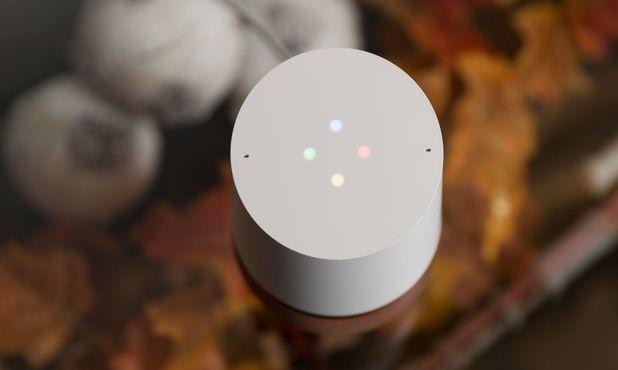
- Activity indicator: when the device is actively listening after the wake word, the lights on top come on. If lights appear when nobody spoke, that was a false activation, and it’s exactly what “that wasn’t for you” exists for.
Should you delete everything?
It’s your call, and it’s a real trade-off rather than a free win. Voice history helps Google’s speech recognition adapt to your accent and phrasing, and Web & App Activity feeds the personalization that makes “call Mum” and “add my usual to the list” work. Wipe it all and turn it off, and the Assistant gets a bit more generic and forgetful.
A sensible middle path for most people: leave Web & App Activity on, keep audio recordings opted out (the default), set auto-delete to 3 months, and use the voice-delete commands whenever something is said near a speaker that shouldn’t live on a server. That gets you a working assistant and a short memory, which is roughly what most of us want from a housemate anyway.
Frequently asked questions
Does deleting my voice history make Assistant worse?
Slightly, and mostly in personalization rather than basic function. Commands like timers, weather, and smart home control work fine with zero history. What degrades is the tailored layer: recognition tuned to your voice, suggestions based on habits, and context from past requests. If you keep Web & App Activity enabled with a 3-month auto-delete, you keep nearly all the benefit while carrying far less data.
Are my recordings reviewed by humans?
Only if you opted in. After the 2019 controversy, Google made human review of audio strictly opt-in through the “include audio recordings” setting, and paused-then-rebuilt the program with that consent gate. If that setting is off, which is the default, your audio isn’t stored for review at all. Transcripts of your requests are still processed by Google’s systems, as with any cloud assistant.
Can I delete everything at once?
Yes. On myactivity.google.com, choose Delete, then All time, and confirm. To target only voice interactions, filter by Assistant (and Gemini) first, then delete all time within that filter. You can also say “Hey Google, delete everything I said this week” for recent items, but the full account-wide wipe has to be done from the web page, which is a deliberate safety choice.
Does this work the same on a Nest speaker as on my phone?
Yes, because the history belongs to your Google account, not to a device. A command asked on your Nest Mini, your Pixel, and your smart display all lands in the same Web & App Activity log, and deleting it there removes it everywhere. The only per-device controls are the physical mic switch and each device’s settings in the Google Home app; the data trail itself is centralized.

Akshay Mhatre is a Tech Journalist who likes to keep up with the latest from the tech world. He has worked at many popular news portals like BGR and TechRadar before joining TheLeaker as a News writer and journalist. A writer by day and a VFX artist by night. In his free time, he also likes to make motion graphics and concept art. You can find him on Instagram @akshayrazr_95 and contact him on akshaymhatre[@]theleaker.com.