
Which 3D printing app is best depends entirely on what you want to do, because no single app finds models, designs them, slices them and controls your printer. One detail decides most of the choice: whether the app is tied to your printer’s brand. To find models, an open library like Printables or MakerWorld works on any phone. To control and watch a print remotely, the free app usually only talks to its own brand of printer, and the printer-agnostic route needs a small server on your network. To design your own models, a tablet with the right app now does real work.
The short version. Pick by the job. For ready-made models, the Thingiverse, Printables, MakerWorld and Thangs apps are free and huge. For designing on a tablet, Tinkercad is the free beginner pick, Nomad Sculpt handles organic shapes and miniatures, and Shapr3D is proper CAD with Apple Pencil support. For watching and controlling a print from your phone, Bambu Handy and Creality Cloud are excellent but mostly work with their own printers; to control any printer you run OctoPrint or Klipper on a Raspberry Pi and pair it with a free app like Obico or OctoApp. Most of these have a free tier, and the paid ones are noted below.
First, what do you actually want to do?
The apps split cleanly by task, so start with yours.
- Find something to print without designing it: jump to model libraries.
- Design your own model on a phone or tablet: jump to design apps.
- Watch or control a print from another room or away from home: jump to monitoring, and read the brand-lock note first.
- Turn a real object into a model: see the scanning apps under design.
Find something to print
If you just want a model to send to your printer, the big libraries all have free apps, and none of them cares which printer you own.
- MakerWorld is Bambu Lab’s library and has grown fast, partly because it pays creators through a points scheme, so the catalogue is large and many models come pre-configured. It is reachable inside the Bambu Handy app.
- Printables is Prusa’s library, free, with a strong quality bar and a contest culture that keeps good models coming.
- Thingiverse is the oldest and largest by sheer count, though the app is dated and the quality is uneven; it is still where many older designs live.
- Thangs is the one to remember, because it is a search engine across many libraries at once, including the ones above, so it is the fastest way to find whether a specific part exists anywhere.
A practical note: a model file is not a print. Whatever you download still has to be sliced for your printer, unless you print a ready-made profile from inside a brand app, which is where the brand apps and desktop slicers come in.
Design your own on a phone or tablet
Designing used to mean a desktop and a mouse. On a modern tablet, and to a lesser extent a phone, three apps now cover most of what a hobbyist needs, plus one that skips designing entirely.
- Tinkercad (free, browser and app, from Autodesk) is the beginner standard. It builds models by combining and subtracting simple shapes, which is enough for brackets, boxes, name tags and simple parts, and it is the gentlest way in.
- Nomad Sculpt is for organic shapes, figures and miniatures. It is a sculpting tool, so engineering parts are not its job. It is a genuinely capable sculpting tool that runs on a tablet, free on Android and a one-time purchase of around $15 on iOS at the time of writing.
- Shapr3D is real CAD on an iPad, with precise measurements and Apple Pencil support, and it syncs to Mac and Windows. It has a free tier, and the full version is a subscription of roughly $239 a year, so it suits someone who designs functional parts often, and it is overkill for a casual user.
- Polycam skips modeling. It scans a real object using your phone’s camera or LiDAR sensor and turns it into a 3D model. The catch is that scans come out messy and usually need cleanup before they print well, so expect to clean the scan up before it prints well.
Watch and control a print, and why the free app is tied to your printer’s brand
This is where the brand lock-in bites. The free apps that let you start a print, watch a live camera and get an alert when something fails are, in almost every case, made by a printer manufacturer and built to work with that manufacturer’s printers.
- Bambu Handy is excellent, and if you own a Bambu Lab printer it is the obvious choice: remote control, a live high-resolution view, automatic timelapses, and MakerWorld models built in. It is free. It does very little for a printer from another brand.
- Creality Cloud is the broadest of the brand apps, combining a model library, cloud slicing and remote control, and Creality says it has grown into an ecosystem of several million users. It is at its best with Creality hardware.
- Anycubic and most other big brands ship their own app too. Same pattern: great for their printers, closed to everyone else.
So if you own one of those printers, download its app and you are done. If you own an older or open-source printer, or you want one app that controls several different machines, the brand apps will not do it.
The printer-agnostic route is to run OctoPrint or Klipper, free software that turns a cheap Raspberry Pi (or a similar small computer) wired to your printer into a web server you control from anywhere. You then pair it with a phone app. Many recent printers ship with Klipper already, the Creality K1 series and most Sovol machines among them, and those can often skip the Pi and pair a Klipper app directly.
- Obico is free to start, needs no card for the free tier, and adds AI-based failure detection that watches the camera and warns you when a print starts to fail. It works with both OctoPrint and Klipper.
- OctoApp gives you monitoring, file management and multiple-printer support for OctoPrint, and it can use Obico’s tunnel to reach your printer from outside your home for free.
- Mobileraker is the standard free app on the Klipper side, with a camera view, print notifications and support for several machines.
- Printoid (Android) and Polymer (iOS) are mature paid alternatives with live camera streaming and full control.
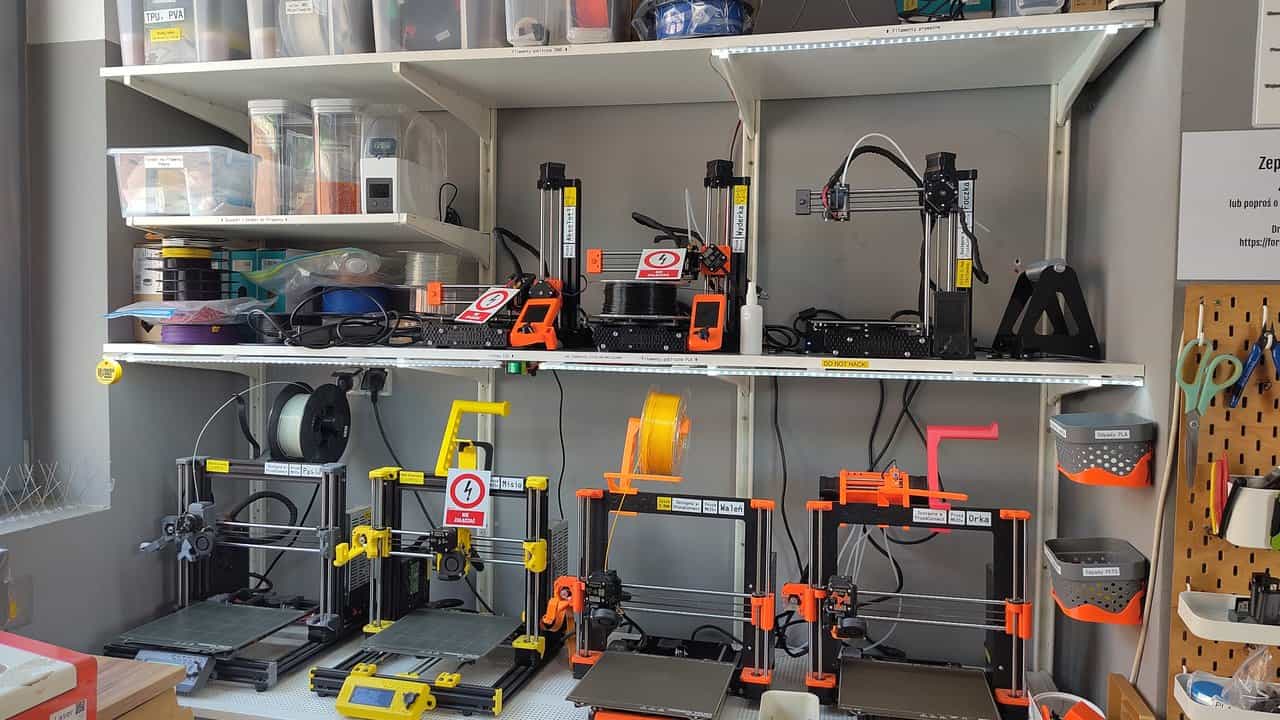
The honest cost of this route is the setup. You need the Raspberry Pi, an hour or two of configuration, and a camera if you want to watch. In return you get one app for any printer and no brand lock-in. Here is my rule of thumb. For one modern printer with a decent app of its own, the Pi route is overkill. For an older printer, or a workshop running several machines, it is the only real option.
What a phone app will not do
- Replace a desktop slicer for complex prints. Cloud and mobile slicing has come a long way, and it is fine for a straightforward model, but supports, multi-part plates and fine tuning are still far easier on a desktop slicer like Cura, PrusaSlicer, OrcaSlicer or Bambu Studio.
- Turn a scan into a clean print. The mesh a scanning app produces is rough, and you will usually repair holes and simplify it first.
- Unlock another brand’s printer. No brand app will control a rival’s machine. If that is what you need, the OctoPrint route above is the answer, and no other download will do it.
FAQ
What is the best free 3D printing app?
It depends on the job. For models, MakerWorld and Printables are free and large. For beginner design, Tinkercad is free. For controlling a Bambu or Creality printer, those brands’ apps are free. There is no single best free app because they do different things.
Can I slice a model on my phone?
For simple models, yes: Creality Cloud and several brand apps include cloud or on-device slicing. For anything with tricky supports or multiple parts, a desktop slicer still gives you far more control, so treat phone slicing as a convenience, and keep a desktop slicer for anything fiddly.
Do I need an app to 3D print at all?
No. You can slice on a computer and print from an SD card or USB with no app involved. Apps add remote monitoring, model discovery and mobile design. None of it is required.
Which app controls any 3D printer, not just one brand?
None of the brand apps do. The way to control any printer from your phone is to run OctoPrint or Klipper on a Raspberry Pi wired to the printer, then use an app like Obico or OctoApp. It takes setup but it is printer-agnostic.

A tech Journalist and Photographer, Dhawal Sharma is a technology enthusiast who loves to research the latest innovations and technology. He has contributed to the Honor Community for a very long period and has crucial expertise in writing tech news and reviewing smartphones and laptops. Analyzing and bringing the facts about any piece of tech is what he loves the most. He is a great product photographer and is the Gizmopedia of TheLeaker. Find him on Facebook and Instagram, and you can also email him at [email protected].