
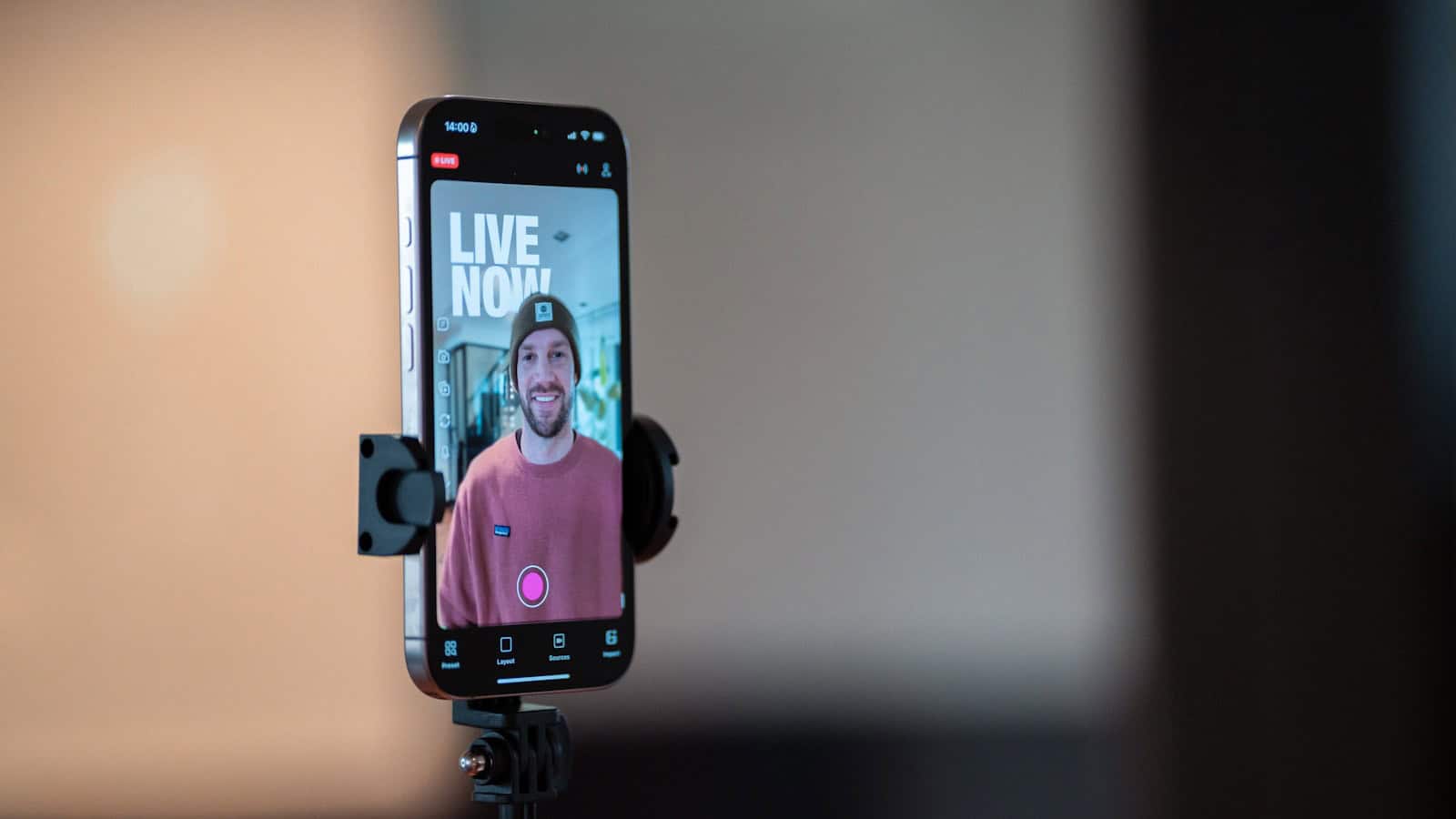
Look at six things before you trust a phone to carry a livestream: camera stabilization, microphone quality, upload connectivity, sustained battery life, sustained thermal performance, and whether the phone has a dedicated creator or streaming mode. Naming specific “best phone” models is a losing bet since hardware turns over every year, but these six categories decide whether a stream looks professional or looks like it was shot through a window during a rainstorm, and they hold regardless of which phone generation you’re shopping in.
Camera and stabilization matter more together than either alone
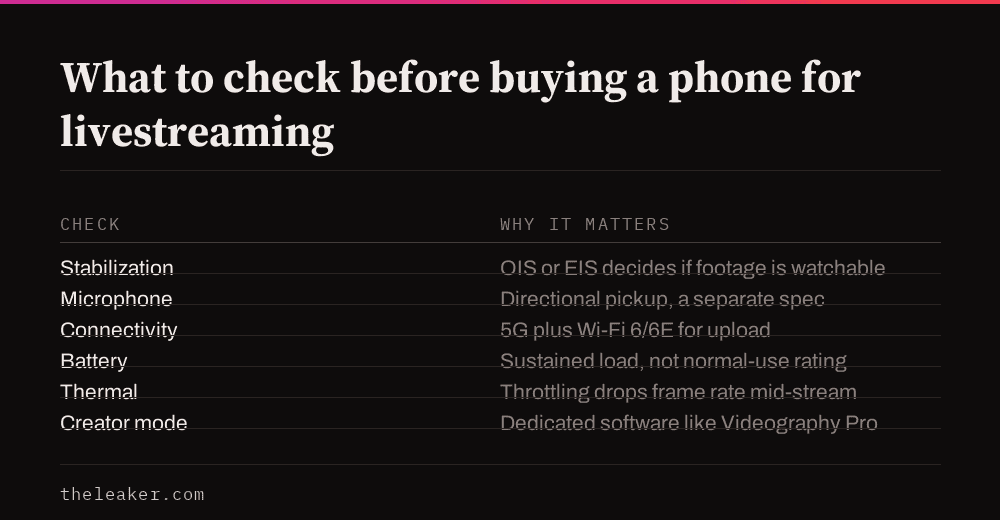
Resolution gets the marketing attention, but optical or electronic image stabilization is what actually determines whether handheld footage is watchable. A shaky 4K stream reads as amateur no matter the pixel count. Dynamic range, how well the sensor handles a bright window behind you or a dim room, matters just as much, since livestreaming rarely happens in controlled studio lighting.
Audio is a separate purchase decision from camera
A directional microphone that isolates your voice from room noise is treated as essential by current buying guides. Check it specifically. A phone’s camera reputation says nothing about how its mic performs. Viewers tolerate mediocre video far more than they tolerate audio they have to strain to hear.
Connectivity decides whether the stream survives, not just how it looks
Reliable upload bandwidth, current 5G plus Wi-Fi 6 or 6E support, is a top-line requirement for any format involving a long, continuous upload, which is exactly what livestreaming is. A phone with an excellent camera and a weak radio will drop frames or buffer regardless of how good the footage looks in isolation.
Battery and heat under sustained load, not typical daily use
Normal battery-life ratings describe intermittent use: browsing, messaging, short video clips. Streaming for an hour or more with the camera, screen, and radios all running continuously drains a phone far faster, so the number that matters is sustained performance under that specific load. The manufacturer’s general battery claim doesn’t cover it. The same logic applies to heat. A processor that throttles itself to avoid overheating during a long recording session will visibly drop frame rate or resolution mid-stream. At the extreme end, some current gaming-oriented phones ship with active cooling hardware for exactly this kind of sustained load, a sign of how real the thermal problem is for anything beyond a quick clip.
A dedicated creator mode is worth checking for
Some manufacturers build phone-specific software for this exact use case rather than leaving it to generic camera apps. Sony’s Xperia line, for instance, ships dedicated Videography Pro and Cinematography Pro modes with manual lens and aperture control, a rear microphone tuned specifically for vlogging, and direct pairing with external monitors for a livestream setup. A phone with software like this built in saves you from stitching together several separate apps to get the same result.
What to skip
Ignore raw megapixel counts on their own, and ignore any spec sheet that doesn’t mention stabilization method or microphone type at all, since that’s a sign the phone wasn’t designed with video capture as a priority. A phone can advertise an impressive camera number while still being a poor streaming choice if it lacks the stabilization, audio, and thermal handling to back it up.
Frequently asked questions
Do I need the newest flagship to livestream well? No. The six categories above, not release year or price tier, determine streaming quality. A mid-range phone with good stabilization and a directional mic can outperform a flagship that skips both.
Why does my phone overheat only when I stream, not during normal use? Streaming keeps the camera, screen, and radio all running continuously for far longer than typical use, which is a heavier sustained load than most daily tasks produce.
Does 5G actually matter if I have strong Wi-Fi at home? For fixed indoor streaming, Wi-Fi 6 or 6E generally matters more. 5G becomes the deciding factor the moment you stream from somewhere without a stable Wi-Fi connection.

I am the chief editor of TheLeaker. I also maintain the backend stuff of the site. I’m a tech enthusiast and loves to do Python coding in my free time. I have worked at many giant publications like XDA Developers and NXTtech before starting TheLeaker.
You can get in touch with me at Garv[at]theleaker.com.